


Master the art of yield management with OpenSky, where every seat becomes a strategic decision, priced, positioned, and filled at precisely the right moment.
Help passenger reach their flights on time with Airport Madness Manager – Premium DXB Edition or try your hands at hospitality strategy in Boutique Hotel Manager – Metropolitan Edition, balancing demand, service, and premium value.
Airport Hub Wars; Why Some Cities Win the Aviation Game
Airport Hub Wars; Why Some Cities Win the Aviation Game
Not all cities are equal in aviation. Some airports dominate their regions while others fade into obscurity. The difference is strategic positioning, infrastructure investment, and airline competition. Understanding hub wars reveals why cities fight over airlines and why losing an airline's hub can devastate regional economics.
The Hub Economics
A hub airport generates enormous economic value. Thousands of jobs in airline operations, ground handling, catering, security, and concessions exist because of the hub. Passengers connecting through the hub stay in hotels, eat at restaurants, and shop in terminals. Hotels, rental car companies, and restaurants all benefit from high passenger volumes.
Atlanta Hartsfield-Jackson is the world's busiest airport because Delta operates a massive hub there. Delta flies hundreds of daily flights through Atlanta, employing tens of thousands of direct workers and supporting hundreds of thousands more through economic multiplier effects. Cities fight to attract or retain hub airlines because the economic impact is massive.
A hub airline generates $5-10 billion in annual economic activity for its host city. Losing that hub is catastrophic. When Northwest Airlines relocated its Minneapolis hub to Detroit in the 1980s, Minneapolis suffered economic contraction that took a decade to recover from. When United reduced its hub presence in many cities, those cities lost thousands of jobs overnight.
Why Airlines Choose Hubs
A hub airport requires specific characteristics. First, it needs geographic centrality; the hub must be positioned to feed spokes across a wide region efficiently. Atlanta serves the Southeast, Houston serves Texas and Latin America, and Denver serves the Rocky Mountain region. A hub in a geographic backwater cannot feed enough spokes to make hub economics work.
Second, the hub needs available infrastructure. Gates, terminals, baggage systems, and maintenance facilities must exist or be buildable. A cramped airport with limited expansion capacity cannot support a major hub even if it has good geography.
Third, the hub needs favorable labor and real estate costs. A hub with expensive union labor and expensive real estate becomes uncompetitive. Delta can afford Atlanta's costs because of scale, but a smaller airline cannot. This is why Southwest chose Dallas and Las Vegas for expansion; reasonable costs plus good geographic and infrastructure positioning.
The Hub Dominance Effect
Once an airline establishes a hub, it becomes entrenched. Network effects make the hub stronger over time. More flights through the hub mean more connecting passengers and more network coverage for the airline. More network coverage attracts more passengers. More passengers justify more flights. The cycle compounds.
Competing against an entrenched hub is nearly impossible. United has hubs in Chicago, Houston, Denver, and San Francisco. From Chicago, it flies to 200+ destinations. A competing airline flying into Chicago must match that network or offer superior product/price. United's massive network makes it the obvious choice for Chicago passengers booking connections.
This network moat is why deregulation created hub-and-spoke networks. Before deregulation, airlines flew point-to-point routes on government-protected routes. After deregulation, they quickly realized network effects and switched to hubs. The airlines with the strongest initial hubs (Southwest in Dallas, Delta in Atlanta, United in Chicago) became dominant.
The Hub Capacity Constraint
All airports have finite capacity. Chicago O'Hare has 190 gates, roughly 100-110 slots per day. If United controls 60% of the gates, it has only so much room for growth. Competing airlines cannot grow because gates are unavailable. This capacity constraint creates geographic moats; an airline cannot dislodge an incumbent because the airport is full.
This is why slot-constrained airports (New York LaGuardia, London Heathrow, Tokyo Narita) see fierce antitrust attention. Control of limited slots = control of the market. Airlines spend billions acquiring other airlines just to get slot access at constrained airports.
Cities dealing with hub capacity constraints must choose between expansion and competition. Expand the airport and invite competitors, or restrict expansion and protect the incumbent airline's hub dominance. Atlanta expanded aggressively, supporting multiple airlines, but remains Delta-dominated. New York restricted expansion, keeping capacity scarce, but also preventing new competition from emerging.
The Secondary Hub Strategy
Some airlines operate multiple hubs to diversify risk and reach different regions. American Airlines has hubs in Dallas, Charlotte, Chicago, and Phoenix. United has hubs in Chicago, Houston, Denver, and San Francisco. This diversification spreads connecting traffic across multiple hubs, reducing dependency on any single hub.
However, multiple hubs require more infrastructure investment and dilute network effects. Each hub must have sufficient aircraft and crew to operate efficiently. A network spread across four hubs is less concentrated than a network hubbed in one city, making each individual hub less dominant.
The Price of Being a Hub City
Cities offering hubs must make infrastructure investments. They invest in terminal expansions, cargo facilities, and employee training centers. They negotiate favorable landing fees and rent. They promise labor peace to attract airline operations.
Cities also accept the downsides. A major hub concentrates pollution from aircraft operations in one area. Ground noise affects local residents. The economic dependency on a single airline creates vulnerability; if the airline reduces capacity, thousands of jobs vanish.
Competitive Threats to Hubs
New aircraft technology threatens traditional hub economics. Wide-body aircraft like the 787 and A350 can fly long-haul point-to-point efficiently, reducing the need for hub connections. A passenger flying Denver to London no longer needs to connect through Newark; a 787 can fly the route directly.
This creates a strategic dilemma for hub airlines. The hub remains profitable for domestic connections, but long-haul international flights increasingly bypass the hub. United used to feed Asian passengers through its San Francisco hub to reach the East Coast. Now, United flies direct San Francisco to London on 787s, and the San Francisco hub adds no value.
Over time, hubs may become less dominant as fuel-efficient aircraft increase point-to-point viability. A hub airline that cannot adapt to point-to-point economics faces disintermediation, where passengers bypass its hub entirely.
The Future of Hubs
Hub airports will remain critical to airline economics, but the hub model is evolving. Traditional connecting passengers through major hubs will decrease as point-to-point options improve. Hubs will become more focused on domestic connections and regional feed, less on international long-haul traffic.
Cities competing for hub status must recognize this shift. Investing in infrastructure to attract international long-haul flights is riskier than attracting domestic connecting traffic, because long-haul is moving away from hubs. The winning hub strategy may be geographic positioning for regional dominance, not global connectivity.
In a board game airline strategy, the hub choice is one of your first and most consequential decisions. The hub determines your network, your cost structure, and your competitive position. Explore hub strategy in Pan Am.
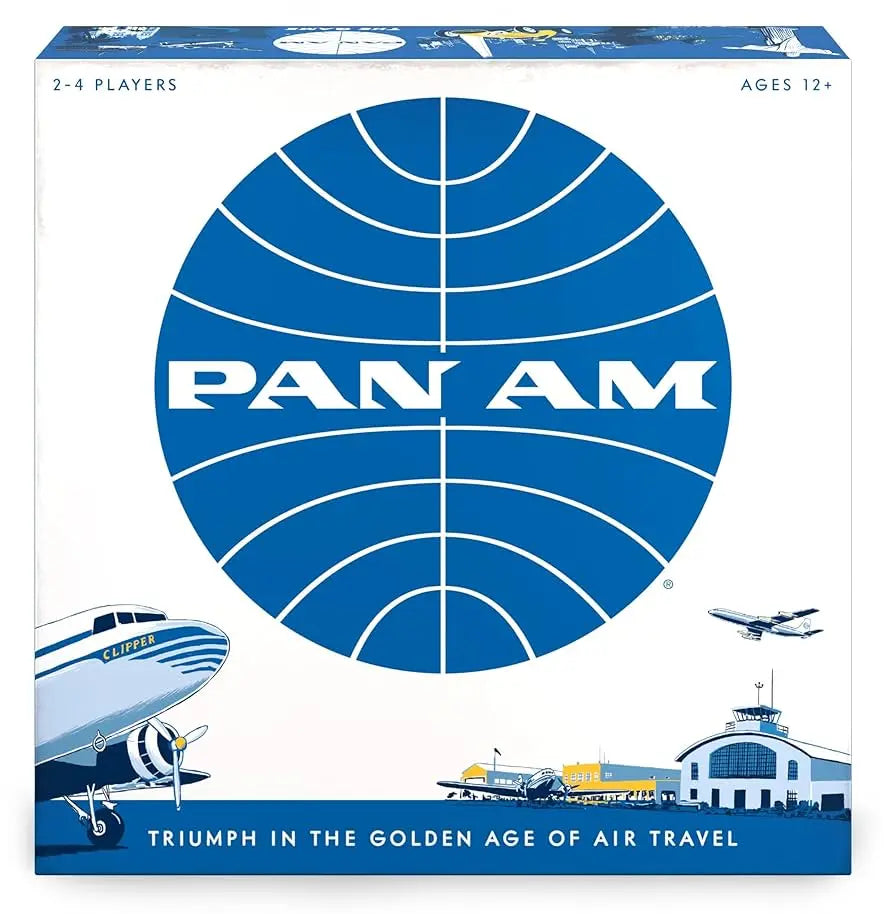
Choose wisely, and your hub becomes an impenetrable moat. Choose poorly, and you will be fighting against entrenched competition for the entire game.