


Master the art of yield management with OpenSky, where every seat becomes a strategic decision, priced, positioned, and filled at precisely the right moment.
Help passenger reach their flights on time with Airport Madness Manager – Premium DXB Edition or try your hands at hospitality strategy in Boutique Hotel Manager – Metropolitan Edition, balancing demand, service, and premium value.
How Airlines Set Prices, Manage Routes, and Make Profit: The Economics Behind Your Flight
How Airlines Set Prices, Manage Routes, and Make Profit: The Economics Behind Your Flight
Ever wondered why the same flight costs $89 one day and $289 the next? Or why a competitor seems to always undercut your fare? Airlines operate on razor-thin margins, and pricing is the difference between bankruptcy and survival. Understanding how airlines set prices reveals a complex dance of data, demand forecasting, and strategy that looks a lot like managing a board game economy.
The Fundamentals of Airline Pricing
Airlines face a unique constraint: seats are perishable inventory. Once a flight departs with an empty seat, that revenue is gone forever. You cannot store a seat. You cannot discount it retroactively to a customer who already bought. This constraint forces airlines to master something called revenue management, a science born in the airline industry and now used across hotels, rental cars, and cruise lines.
The core principle is simple: sell the right seat to the right customer at the right price and time. In practice, this requires analyzing millions of data points in real-time. Demand forecasting, competitor pricing, seasonality, booking window length, and historical trends all feed into automated systems that adjust fares continuously.
Dynamic Pricing: How the Math Works
Modern airlines use dynamic pricing algorithms powered by AI and machine learning. These systems monitor competitor fares, search activity, inventory levels, and predicted demand to adjust ticket prices constantly. A 10% improvement in forecast accuracy can generate a 1% increase in revenue, a massive difference at scale.
The system works by dividing seats into fare classes. Economy might have 120 seats at $99, another 80 seats at $149, and 50 seats at $199. As the flight date approaches, the system forecasts how many passengers will book at each price level. If early demand is weak, it might release more cheap seats to stimulate bookings. If demand surges, it closes cheap seats and protects inventory for higher-paying customers, forcing late bookers into premium fares.
The airline does not set a single price per route. Instead, it manages availability across fare buckets, opening and closing classes to maximize total revenue. This is yield management, and it is why prices fluctuate so dramatically near departure.
Route Profitability and Network Design
Airlines do not treat every route equally. Route profitability depends on several factors: the competitive landscape, airport pair demand, seasonal patterns, and whether the airline operates a hub-and-spoke or point-to-point network.
A transcontinental flight from New York to Los Angeles might have dozens of competing carriers, forcing lower fares. A monopoly route with minimal competition allows higher prices. An airline that operates a hub in a city can feed passengers from spokes into transcontinental flights, allowing it to price aggressively on spoke-to-spoke routes and recover margin on hub-to-hub connections.
This is where route profitability really matters. Airlines reported an average 14% increase in route profitability when revenue management systems were properly implemented. That difference between profit and loss on a single route compounds across hundreds of flights.
The Role of Capacity and Load Factor
Load factor is the percentage of seats filled on a flight. A 85% load factor means 85 out of 100 seats were sold. Load factor is the single most important metric for profitability. The fixed costs of flying a plane (crew, fuel, landing fees, maintenance reserves) do not change whether you carry 60 or 100 passengers. Every additional paying passenger is almost pure contribution margin.
Airlines obsess over load factor because the difference between 75% and 85% load factor on a full schedule can mean the difference between operating profit and operating loss. This is why airlines overbook flights, offer last-minute discounts to fill seats, and adjust capacity up or down based on demand patterns.
Ancillary Revenue and the New Model
Traditional revenue management only touched ticket prices. Modern airlines have expanded the game dramatically. Seat assignments, baggage fees, priority boarding, meal upgrades, and in-flight amenities are all now dynamically priced revenue sources.
Southwest Airlines, traditionally known for simple, all-inclusive pricing, now offers tiered fares (Basic, Choice, Choice Preferred) with paid upgrades for seat selection, flexibility, and early boarding. This tiered model allows the airline to capture revenue from price-sensitive passengers while maximizing contribution from customers willing to pay for convenience.
What This Means for Strategy
The lesson for strategic board game players is that airline management is not about maximizing load factor alone. It is about maximizing total revenue per seat by managing price discrimination across customer segments. A half-full flight at premium fares can be more profitable than a full flight at discounted fares.
Airlines also cannot ignore capacity decisions. Adding a flight to a route increases total seats available, which lowers fares due to increased supply. Removing a flight reduces supply, allowing higher fares, but may lose price-sensitive demand. The optimal capacity is where marginal revenue equals marginal cost, a balance point that shifts daily based on market conditions.
Next time you book a flight and see prices have jumped $50, you are witnessing this system in action. The airline has forecast stronger demand and closed cheaper inventory to protect seats for higher-paying customers. Understanding this mechanism transforms your view of airline pricing from "they are gouging me" to "they are optimizing a constrained asset in a competitive market."
Want to experience this balancing act yourself? Try Pan Am, where you bid for landing rights, develop flight routes, buy airplanes, and manage pricing across your growing network.
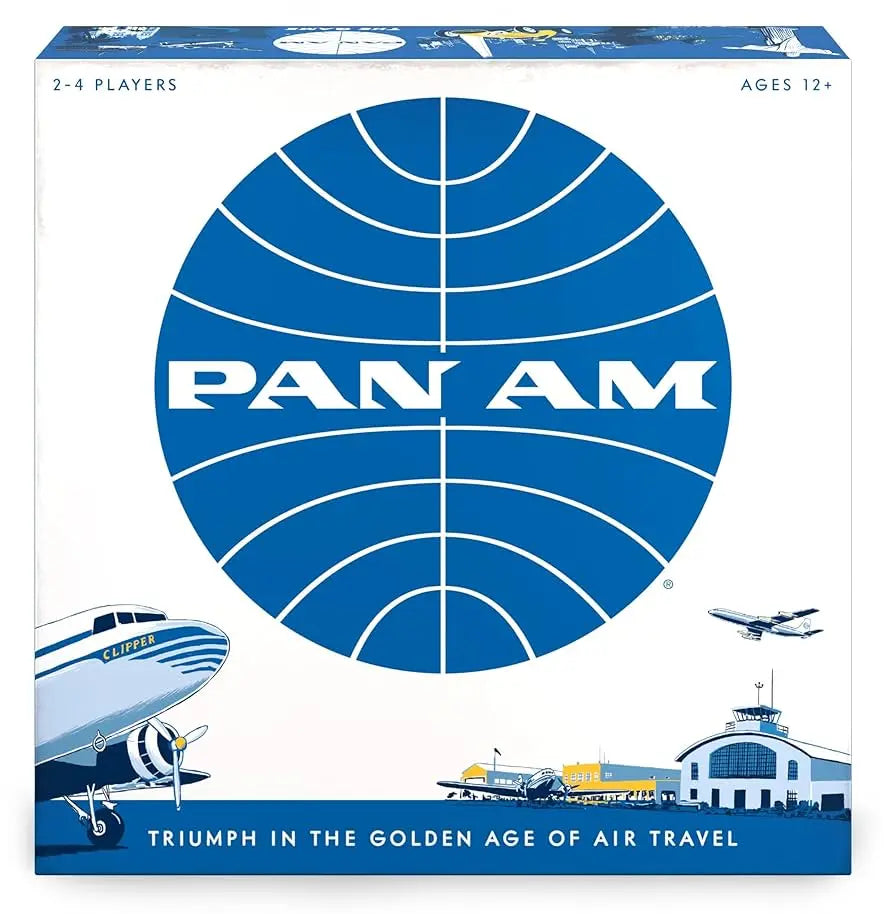
Every decision about routes, capacity, and pricing directly affects profitability, just like in the real world. Or explore Airlinopoly for a deeper airline management simulation.