


Master the art of yield management with OpenSky, where every seat becomes a strategic decision, priced, positioned, and filled at precisely the right moment.
Help passenger reach their flights on time with Airport Madness Manager – Premium DXB Edition or try your hands at hospitality strategy in Boutique Hotel Manager – Metropolitan Edition, balancing demand, service, and premium value.
The Real Cost of Running an Airline; Hidden Expenses Beyond Fuel
The Real Cost of Running an Airline; Hidden Expenses Beyond Fuel
Airline profit margins are infamously thin, 2-5% on average. Most people assume fuel is the culprit, but fuel is only part of the story. Understanding airline costs reveals why airlines obsess over penny details and why a single inefficiency can destroy profitability on an entire network.
The Major Cost Categories
A narrow-body aircraft (A320 or 737) operating a 4-hour flight generates roughly $25,000 in operating cost. Breaking this down: fuel accounts for $8,000-10,000 (40%). Crew cost is $2,000-3,000 (10%). Maintenance reserves are $2,000-2,500 (10%). Airport fees, catering, and ground handling combine for $3,000-4,000 (15%). Depreciation and financing on the aircraft itself are $5,000-6,000 (25%).
With 180 seats, this aircraft must generate $139 per seat in revenue to break even, before allocating corporate overhead, sales, customer service, and profit.
Fuel: The Volatile Cost
Fuel represents the largest variable cost. At $1.50 per gallon (typical current prices), a narrow-body aircraft burning 750 gallons per hour on a 4-hour flight uses 3,000 gallons, costing $4,500. Wide-body aircraft burn 1,200-1,500 gallons per hour; a 12-hour flight burns 14,400-18,000 gallons.
Airlines hedge fuel prices using derivatives to manage volatility. A fuel spike from $1.50 to $2.50 per gallon adds $3,000 per flight, or $3 million per month for a 100-aircraft airline. These price swings make profitability impossible to forecast without hedging.
Fuel efficiency is critical; airlines obsess over aircraft age and aerodynamic modifications. A newer A320neo is 20% more fuel-efficient than a 20-year-old A320. On a 4-hour flight, this saves $1,600 per flight in fuel. Over 10 flights per day, that is $16,000 per day, or $5.8 million per year in fuel savings. A $40 million aircraft pays for itself in fuel savings within 7 years.
Labor Costs: The Entrenched Expense
Airlines employ pilots, flight attendants, ground crews, mechanics, customer service agents, and administrative staff. Combined, labor represents 25-30% of total operating cost, second only to fuel.
Pilot costs are substantial. A captain on a major airline earns $200,000-250,000 per year in base salary plus benefits. A first officer earns $70,000-100,000. A typical flight requires two pilots, so one aircraft's annual pilot cost is $540,000+ for personnel plus benefits. A 100-aircraft airline spends $50+ million per year on pilots alone.
Flight attendants are similarly expensive. A major airline has 25,000+ flight attendants, earning $35,000-65,000 per year depending on seniority. Annual flight attendant cost is $1.5+ billion for a major carrier.
Ground crews, maintenance technicians, and customer service agents are unionized with high wage scales. An airline cannot easily cut labor costs without confronting labor unions, which can strike and disrupt the entire operation. This makes labor a sticky cost; it does not decrease proportionally if demand drops.
This is why airlines park aircraft when demand falls sharply. They cannot reduce labor cost quickly, so they reduce capacity (remove aircraft from service) and maintain crew scaling. During COVID, airlines parked 50%+ of aircraft but laid off only 20-30% of staff because contracts prevented rapid reduction.
Maintenance: The Growing Burden
Aircraft maintenance accounts for 10-12% of operating cost and grows with fleet age. A new aircraft requires routine maintenance (oil changes, filter replacements) every 500-1000 flight hours. Aging aircraft require major overhauls every 10,000-20,000 flight hours costing $1-3 million per event.
An aircraft flying 10 hours per day (3650 flight hours per year) requires a major overhaul every 3-5 years. With fleet sizes of 500-1000 aircraft, major airlines schedule one major overhaul per week, constantly. Missing an overhaul risks catastrophic failure and grounding the entire aircraft.
Maintenance labor is expensive; mechanics are specialized technicians earning $50,000-80,000+ per year. A major overhaul of a narrow-body might require 100 mechanics for 2 weeks, costing $200,000+ in labor alone, plus parts ($400,000+). The total cost per overhaul can exceed $1 million.
Airport Fees: The Unavoidable Tax
Airports charge airlines for landing, gate use, and ground handling. A narrow-body landing at a major hub airport (Chicago, Atlanta, Dallas) pays $1500-3000 per landing. A wide-body pays $3000-5000. At a smaller airport, landing fees might be $500-1000.
Gate fees (ramp rental) are separate, charged per hour or per use. At a major hub, gate fees can be $100-200 per hour. A 4-hour turnaround (2 hours ground time) costs $200-400 per flight in gate fees alone.
These fees scale quickly. An airline operating 500 daily flights averages $750,000 per day in landing and gate fees, or $274 million per year. At 3% operating margins, this is 10% of annual profit for a major carrier.
Airports increase fees annually, compressing airline margins further. Major airline hubs charge premium fees; secondary airports compete with low fees to attract carriers. This is why Southwest and budget airlines concentrate at secondary airports (Love Field in Dallas, Burbank in Los Angeles); landing fees are 30-50% lower.
Catering and Ground Services
Catering costs $3-8 per passenger depending on flight length and service level. A 180-seat flight at $5 per passenger costs $900 in catering alone. Most airlines use third-party catering contractors; the contractor takes margin, making in-house provision cheaper.
Ground handling (boarding, baggage handling, cleaning, pushback) is typically outsourced to specialists. Ground handling costs $1500-3000 per flight depending on aircraft size and airport labor costs.
For short-haul aircraft flying 8-10 times per day, ground handling and catering combine for $15,000-25,000 per day per aircraft. A 100-aircraft fleet spends $1.5-2.5 million per day on these services.
Depreciation and Capital Costs
Aircraft depreciation is the biggest long-term cost. A $120 million narrow-body aircraft depreciated over 20 years is $6 million per year. A 100-aircraft fleet depreciates $600 million per year.
Many airlines lease rather than own, converting depreciation to lease payments. A 5-year lease on a narrow-body is roughly $15 million (1.25 million per month). This is comparable to straight-line depreciation plus interest on capital, making the economics similar between ownership and leasing.
Interest rates matter enormously. At 5% interest on $120 million, interest cost is $6 million per year. At 6%, it is $7.2 million. A 100-aircraft fleet with 1% higher interest rates costs an extra $120 million over the aircraft's life. This is why airlines refinance debt aggressively; every percentage point saved compounds across the fleet.
The Cost-Plus Trap
If an airline's total operating cost per seat is $139 and average revenue per seat is $142, profit margin is only 2%. At 85% load factor, break-even happens at roughly $108 average revenue per seat (assuming 180 seats). Drop load factor to 80%, and break-even climbs to $114 per seat. Most airlines operate near this margin.
This explains why airlines obsess over tiny efficiency gains. A 1% improvement in fuel consumption saves $40 million per year for a major airline. A 1% improvement in labor productivity (fewer employees per flight) saves $20+ million. These micro-efficiencies compound across thousands of daily flights.
It also explains why airlines often seem unprofitable. They are! Most years, 1-2 of the big three US carriers operate at breakeven or slight loss. Profitability requires either demand growth (more revenue) or cost cuts (smaller aircraft, fewer staff, secondary airports). Demand growth is limited during economic downturns, so airlines cut costs, reduce service, and try to survive.
The Strategic Implication
Running an airline profitably requires excellence across every cost category simultaneously. Lower labor costs, fuel efficiency, asset utilization, and overhead management all matter. Master your cost structure in Airlinopoly or Pan Am.
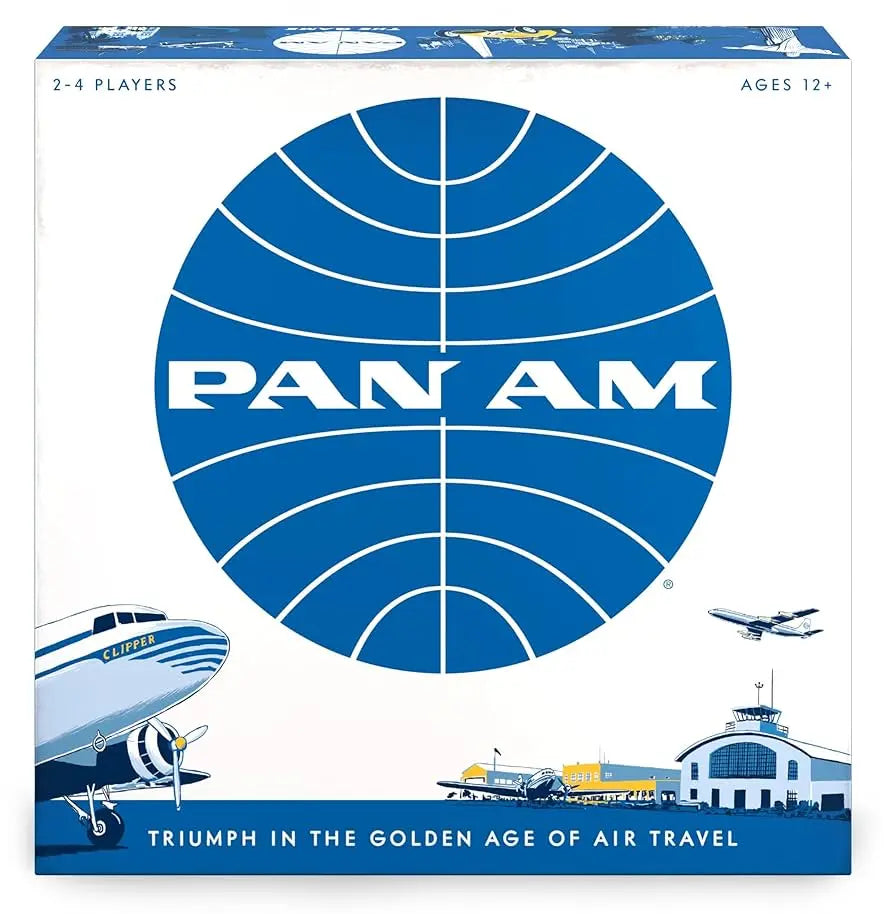
Price competitively and make profit. Ignore costs, and you will go bankrupt regardless of revenue.
This is why established carriers with scale win; they have leverage with suppliers, better asset utilization across large fleets, and efficiency in staff and maintenance. New carriers without scale struggle because they have none of these advantages.
In a strategy game, think about airline costs the same way. Every flight has fixed and variable costs. Every decision about aircraft size, route frequency, and capacity allocation affects per-seat costs. Master your cost structure, and you can price competitively and make profit. Ignore costs, and you will go bankrupt regardless of revenue.