


Master the art of yield management with OpenSky, where every seat becomes a strategic decision, priced, positioned, and filled at precisely the right moment.
Help passenger reach their flights on time with Airport Madness Manager – Premium DXB Edition or try your hands at hospitality strategy in Boutique Hotel Manager – Metropolitan Edition, balancing demand, service, and premium value.
Building Your Dream Airline Network; A Strategic Guide to Route Planning
Building Your Dream Airline Network; A Strategic Guide to Route Planning
Every airline network starts with a blank map and a single route. Expanding that network requires strategic decisions about growth sequences, capacity allocation, and market entry timing. Understanding how successful airlines grow reveals that route planning is not about chasing demand; it is about creating demand through strategic positioning.
The First Route Problem
A new airline must choose its inaugural route carefully. It needs sufficient demand to fill aircraft, but not so much competition that survival is impossible. Most successful startups launch between a major city and a secondary city with underserved demand. Jet Blue started New York to Fort Lauderdale; Southwest started Dallas to Houston and San Antonio.
The route must generate enough revenue to cover operating costs plus debt service. A narrow-body aircraft costs $100-150 million. Fuel costs $15,000-25,000 per flight hour. Crew, landing fees, maintenance, and catering add another $5000-8000 per flight. A 180-seat aircraft flying 4 hours per day (2 round trips) needs 140+ passengers per day at $100+ average fare to break even. The first route must sustain that load factor from day one.
Network Effects and Connectivity
Once the first route is profitable, expansion follows a hub-and-spoke or point-to-point pattern based on strategy. Hub-and-spoke networks grow by adding spokes to the hub; each new spoke generates connections to all existing spokes, multiplying value from the same aircraft.
Adding a Denver hub-spoke to an existing Atlanta hub increases connectivity between all Denver city pairs and all Atlanta city pairs without requiring additional flights to exist. An Atlanta-Denver flight that connects 30 Atlanta spoke cities to 20 Denver spoke cities creates 600 potential connecting itineraries. This network effect allows hub-and-spoke carriers to grow with sub-linear increases in aircraft and crew.
Point-to-point networks grow by adding individual routes between city pairs. Each new route is independent; it does not automatically generate connectivity to existing routes. A Southwest expansion from Dallas to Las Vegas does not create value for existing Denver to Albuquerque passengers unless they want to connect through Dallas. Growth requires more aircraft and crew proportional to the new routes.
Market Entry Strategies
Strategic airlines enter markets in waves. They identify an underserved market (typically one dominated by a high-cost incumbent or a gap with no service), enter with low fares and high frequency, and establish a beachhead. Once established, they expand to adjacent markets using existing aircraft and crew.
Southwest entered California in 1989, starting with limited intrastate routes. It then expanded to Phoenix, Las Vegas, and Denver, using California as a base to feed connecting passengers and crew. By 1995, it had built a powerful West Coast network before attempting national expansion.
This sequential market entry strategy minimizes risk by building profitable local networks before national ones. A new airline does not compete coast-to-coast against entrenched carriers. Instead, it dominates a region first, then slowly expands.
Capacity vs Frequency Trade-offs
A route with 500 daily passengers can be served with one large aircraft flying once daily (400-seat 767) or two smaller aircraft flying twice daily (150-seat A320s). Both carry 400 passengers per day, but the frequency strategy wins because it attracts more passengers through convenience and schedule frequency.
A passenger choosing between a 2 PM and 7 PM flight has options. A passenger with only a 2 PM option is captive. Frequency attracts choice-conscious passengers who value schedule flexibility over price. These are typically higher-yield passengers.
However, frequency requires more crews, ground staff, and gates at both endpoints. A route with limited capacity (e.g., constrained gates or slots) forces the airline to choose between frequency and large aircraft. At constrained airports like New York LaGuardia, frequency is impossible; an airline with 4 slots will use large widebody aircraft to maximize capacity. At less-constrained airports, smaller frequent aircraft win.
Aircraft Right-Sizing
Deploying the wrong aircraft destroys route economics. A narrow-body A320 (180 seats) on a route where load factors average 65% (117 passengers) is fine if it flies 4+ times daily because frequency attracts enough passengers to achieve that load factor. But if the same aircraft flies only twice daily, load factor drops to 50% (90 passengers), and the flight loses money because per-passenger costs become too high.
Wide-body aircraft (330+ seats) require 85%+ load factors to be economical because their unit costs are higher. They work on dense hub-to-hub routes or established leisure destinations with high demand. They fail on sparse point-to-point routes.
An ultra-long-haul wide-body like the 787 or A350 costs more than a narrow-body on a per-flight basis but less on a per-seat basis. This makes them ideal for point-to-point international routes. The aircraft is expensive, but if you fill 85% of 250 seats across the Pacific, per-passenger cost is economical.
Demand Seasonality and Utilization
Routes vary wildly by season. A Florida beach route might have 400 passengers per flight in January and 150 in August. Airlines using fixed capacity overfly in winter and underutilize in summer. The solution is flexible capacity; deploy large aircraft in high season and smaller aircraft in low season, or park aircraft during slow periods.
This requires owned aircraft, not leases. Lease payments are fixed regardless of utilization. Owning aircraft allows seasonal redeployment. United might fly a 777 on San Francisco to Honolulu in winter (high leisure demand) but redeploy that aircraft to Chicago-Denver in summer (high business and domestic leisure demand). The flexibility to move aircraft across the network is worth the cost of ownership.
Route Profitability Metrics
Every route has a breakeven point: the load factor and average fare required to cover operating costs and contribute to fixed overhead. A route flying twice daily needs only 60% load factor at $100 average fare. The same route flying once daily needs 75% load factor at $100 fare, or 60% load factor at $125 fare.
Airlines track route profitability obsessively. If a route drops below profitability, they cut it within 6 months. If it exceeds targets, they increase capacity. This dynamic allocation of aircraft across the network ensures capital is deployed where it generates the highest return.
Competitive Dynamics
Entering an established route requires strategy. A new airline cannot compete directly on price with incumbents that have cost advantages from scale. Instead, it enters with differentiation: higher frequency, better schedule, premium product, or loyalty program benefits.
JetBlue entered dominated East Coast markets not by competing on price but by offering superior product (lie-flat beds, free TV) and schedule convenience. It charged premium fares but filled aircraft because passengers valued the product differential.
Most new airline failures result from entering established price-competitive routes without a differentiation strategy. The incumbent cuts prices, both new entrants lose money, and the new airline exits within 18 months. The successful strategy is to enter underserved or unserved routes first, establish profitability, then expand to competitive routes from a position of strength.
The Ultimate Network Strategy
The best airline networks balance hub-and-spoke connectivity with point-to-point flexibility. They deploy the right aircraft on the right routes for the right season. They enter markets sequentially to build regional dominance before national expansion. They price for profitability, not just market share. They maintain the flexibility to redeploy aircraft as market conditions change.
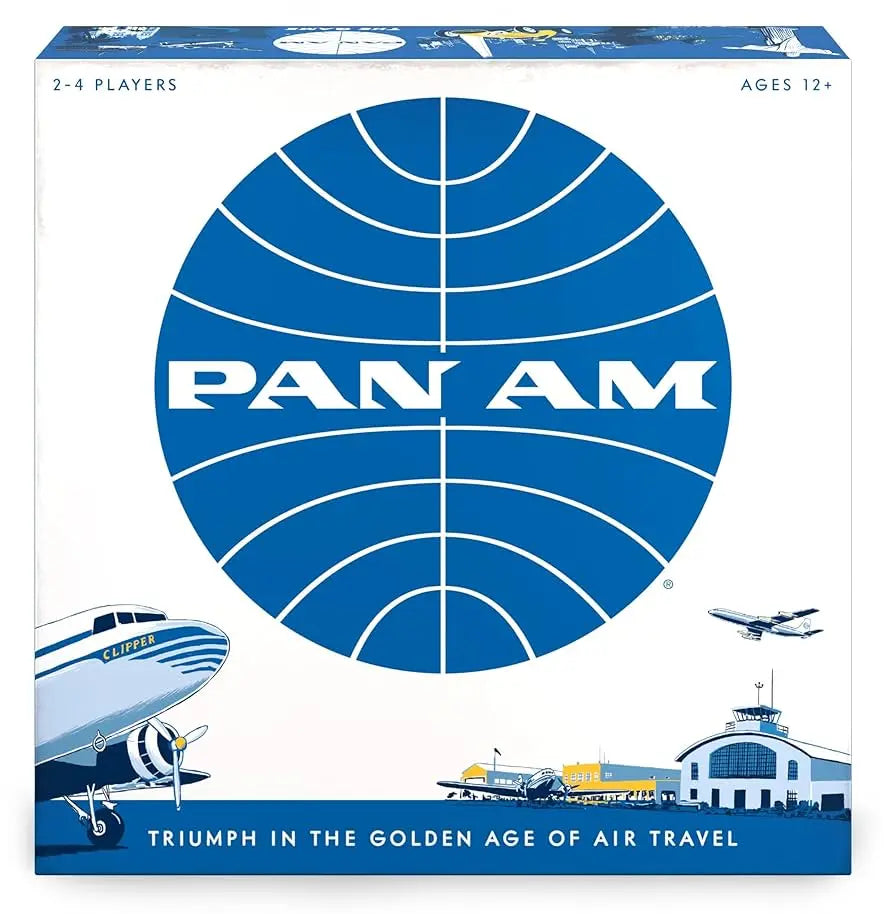
Network planning is the chess game of airline strategy. Every route decision cascades through the system, affecting crew scheduling, maintenance planning, cash flow, and competitive position. Master network design in Pan Am or Airlinopoly.
Separate bankruptcy from billion-dollar market cap.