


Master the art of yield management with OpenSky, where every seat becomes a strategic decision, priced, positioned, and filled at precisely the right moment.
Help passenger reach their flights on time with Airport Madness Manager – Premium DXB Edition or try your hands at hospitality strategy in Boutique Hotel Manager – Metropolitan Edition, balancing demand, service, and premium value.
Hotel Revenue Management; How Hotels Stay Profitable in a Competitive Market
Hotel Revenue Management; How Hotels Stay Profitable in a Competitive Market
Hotels face the same core problem as airlines: fixed capacity and perishable inventory. A hotel with 200 rooms generates the same revenue whether 150 or 200 are occupied; an empty room generates zero revenue forever. Revenue management systems help hotels optimize pricing, minimize vacancy, and maximize profit. The parallels to airline pricing are striking, and the lessons are powerful for understanding service business economics.
The Fundamental Hotel Economics
A 200-room hotel in a mid-sized US city costs $30-50 million to build. Fixed costs include mortgage/rent, property taxes, insurance, and staff (housekeeping, front desk, management). These costs are the same whether occupancy is 50% or 90%.
Variable costs include linens, toiletries, cleaning supplies, and utilities. A populated room costs $30-50 more to service than an empty room. So the marginal contribution of an occupied room is the rate minus variable costs. At a $100 average daily rate with $35 variable costs, each occupied room contributes $65 toward fixed costs.
Fixed costs for a 200-room hotel might be $100,000 per day ($36.5 million annually). Breakeven occupancy is 100,000 / 65 = 1,538 rooms per day, or 1,538 / 200 = 7.7 rooms per day to break even. This is the occupancy rate needed to cover fixed costs; any occupancy above 7.7 rooms generates profit.
But this simplified math ignores the real constraint: pricing power decreases with high occupancy, and demand varies by season. The hotel's job is to maximize total revenue (rate times occupancy) given fluctuating demand and competitive pricing pressure.
Dynamic Pricing in Hotels
Hotels use dynamic pricing similarly to airlines. A Marriott property offers $89 on quiet Tuesday nights and $189 on busy Friday nights. The pricing algorithm considers demand, competitive supply, local events, and day of week. A concert in town increases Friday demand and prices. A holiday weekend increases supply of traveling competitors, decreasing pricing power.
The system balances inventory availability and pricing aggressively. If occupancy is forecast to be 70%, the system keeps pricing low to stimulate demand. If occupancy is forecast to be 95%, the system raises prices sharply, knowing demand exceeds supply. This dynamic pricing can increase revenue 20-30% compared to fixed pricing.
The Advance Booking Problem
Airline customers book 3-6 weeks in advance on average; hotel customers book 5-10 days in advance on average. This shorter booking window gives hotels less visibility into demand and makes forecasting harder. A hotel has only 2-3 days to adjust pricing based on booking pace before the night arrives.
This creates a forecasting challenge. A hotel expects 60% occupancy Thursday based on Tuesday's bookings. It prices at $110. Wednesday, bookings surge, and occupancy is now forecast at 85%. The hotel should raise prices, but it is too late; most customers have already booked. The hotel misses revenue because of short booking windows.
To mitigate this, hotels use aggressive pricing at short booking windows. A Friday night showing 50% occupancy 2 days before triggers discount pricing (maybe $79) to capture last-minute demand. This "rate relief" strategy fills rooms that would otherwise stay empty and generates contribution.
Occupancy vs Rate Optimization
There is a common misconception that hotels prioritize occupancy. Actually, sophisticated hotels optimize revenue, not occupancy. A hotel with 150 rooms occupied at $100 average rate generates $15,000 in revenue. A hotel with 180 rooms occupied at $80 rate generates $14,400. The first hotel is more profitable despite lower occupancy.
This is why high-end hotels sometimes keep occupancy at 70-75%; they are not desperate for bookings. They prioritize rate. A Four Seasons property would rather have 150 rooms at $400 than 200 rooms at $300, even though the second option has higher occupancy.
Budget hotels reverse this; they prioritize occupancy because variable costs are high relative to rate, and fixed costs are lower (lower staffing, less service). A Budget Inn generating 90% occupancy at $70 is more profitable than 70% occupancy at $90 because filling that empty room with $70 contributes $70 - $35 = $35 toward fixed costs, improving the overall equation.
Segmentation and Rate Fencing
Hotels use rate fencing to charge different prices to different customer segments. Business travelers book last-minute and are price-inelastic; they pay $180 on Friday. Leisure travelers book 2 weeks in advance and are price-sensitive; they pay $90. Without fencing, hotels would need to average $135, losing the business traveler $45 in margin and the leisure traveler who cannot afford $135.
Rate fencing uses non-price mechanisms to enforce segment separation. Non-refundable rates are cheaper but non-refundable; business travelers avoid them because they need flexibility. Advance purchase rates are cheaper but require booking 14+ days in advance; leisure travelers get them, business travelers do not. Length of stay restrictions force 3-night bookings on package rates, pushing 1-night business travelers to higher rate categories.
Perfect price discrimination would charge each customer their maximum willingness to pay. Perfect rate fencing approximates this. The customer willing to pay $180 pays $180. The customer willing to pay $90 pays $90. Without fencing, hotels must choose a single price and accept that some customers overpay and others do not book.
Channel Management
Hotels distribute rooms through multiple channels: direct website, third-party booking sites like Expedia, corporate travel management systems, and tour operators. Each channel takes a commission (10-25%) and serves different customer segments.
The hotel must manage pricing across channels carefully. If the hotel offers $89 directly and Expedia offers $79 (hotel pays 20% commission), the net revenue is the same. But customers prefer Expedia because the displayed price is lower. To preserve direct bookings, hotels often offer perks on direct bookings (free breakfast, late checkout) rather than lower prices.
Channel management also involves inventory allocation. If the hotel has 200 rooms and forecast occupancy is 75% (150 rooms occupied), it allocates maybe 100 rooms to OTA channels (receiving 20% commission) and reserves 50 for direct sales (receiving 100% revenue). This ensures direct sales priority while filling remaining inventory through paid channels.
The Loyalty Program Lever
Hotel loyalty programs work identically to airline loyalty programs. Members earn points, redeem free nights, and receive upgrades. A Marriott Platinum member with 100,000 points in their account is locked in; switching to a competing hotel chain means forfeiting those points. Hotels use this to extract premium pricing from members.
A non-member paying $120 is price-sensitive. A Platinum member paying $140 is less sensitive because they are earning elite night credits toward status renewal and accumulating points. The loyalty program allows the hotel to charge premium rates to the most valuable customers.
Competitive Context
Hotels must balance revenue optimization against competitive pricing. If every hotel in a market uses aggressive dynamic pricing, customers perceive prices as volatile and unpredictable, potentially suppressing demand. If one hotel optimizes while competitors keep fixed prices, the optimizing hotel captures outsized revenue.
This creates an incentive to follow competitors' pricing strategies. If a Hyatt raises prices, a nearby Marriott feels pressure to match. If competitor prices drop, occupancy transfers away, forcing matching price cuts. Rate wars can destroy profitability in competitive markets unless all properties exercise discipline and commit to rate maintenance.
What This Teaches About Business Economics
Hotels demonstrate that revenue management is universal across fixed-capacity businesses. Airlines, hotels, rental cars, cruise lines, and restaurants all use dynamic pricing to optimize revenue. Understanding hotel revenue management provides intuition for pricing strategies applicable across industries.
The key insight is that pricing power comes from scarcity. A hotel on a busy weekend with 10 competitors has low pricing power; customers can easily switch. A hotel with limited supply in high demand has enormous pricing power. Scarcity allows rate increases; abundance forces rate cuts.
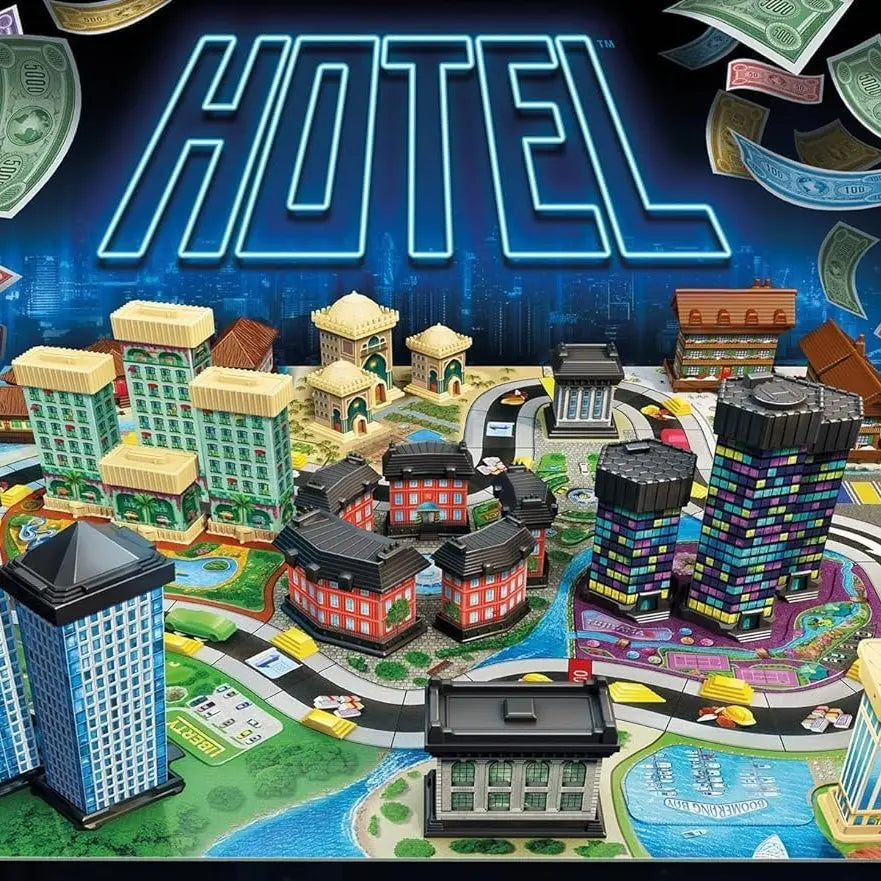
In your airline travel strategy game, think like a hotel manager. When you have high demand and limited aircraft capacity, raise prices aggressively. When you have excess capacity and weak demand, discount heavily. Balance this across routes and time periods to maximize total revenue. Experience hotel and airline revenue management together in Hotel Board Game.
The hotel industry shows this playbook works across different business models.